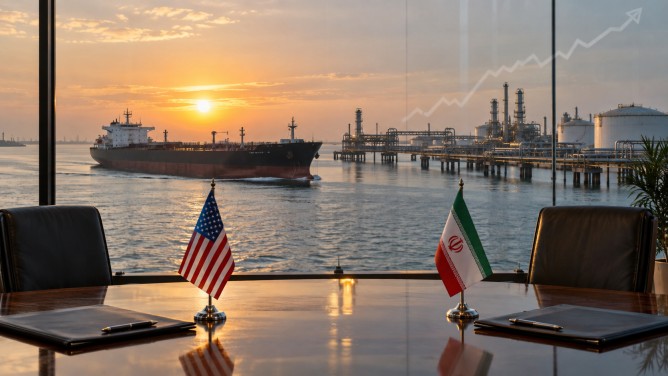
Global oil markets are closely watching the United Nations General Assembly in New York, where potential diplomatic talks between the United States and Iran could impact future oil prices. Investors are particularly attentive to whether U.S. President Donald Trump and Iranian President Masoud Pezeshkian might meet during the assembly, amid ongoing geopolitical tensions in the Middle East.
On Tuesday, this anticipation, combined with regional instability, propelled oil prices upward after four consecutive days of declines. Brent crude futures for November delivery climbed by 1.7%, reaching approximately $102 per barrel. Similarly, U.S. West Texas Intermediate (WTI) crude for October increased by 1.7% to nearly $97 per barrel, while the more actively traded November WTI contract also rose.
The Middle East remains a focal point for oil markets, with Saudi Arabia ramping up crude exports through the Strait of Hormuz, mitigating some worries about global supply disruptions. This increase comes after previous interruptions affected shipments via its East-West pipeline. However, the region’s stability is far from assured, as Yemen’s Houthi group, aligned with Iran, continues to mount attacks that add to the uncertainty.
In response to these tensions, China has called on Iran to exert influence over the Houthi group to reduce hostilities, particularly those impacting Saudi Arabia. This appeal underscores the broader geopolitical complexities intertwined with oil supply concerns in the region.
Compounding the situation, Libya faces its own challenges as an armed group reportedly shut a valve on the Sharara crude pipeline. This action has caused a significant drop in production at one of the country’s major oilfields, reducing output by around 200,000 barrels per day. Such developments contribute to the volatile landscape affecting oil prices globally.