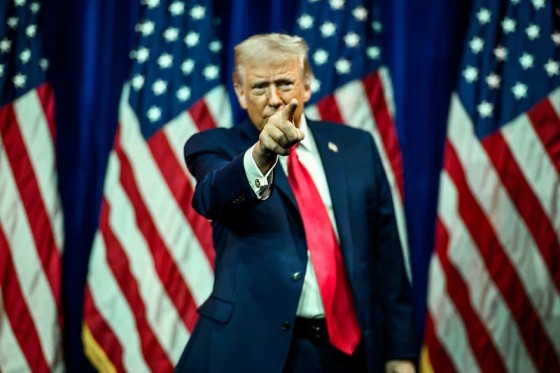
During a cabinet meeting, US President Donald Trump issued a stern warning to Oman regarding the strategic Strait of Hormuz, a crucial global oil shipping lane. Trump emphasized that the strait must remain accessible to all and cautioned against any nation attempting to assert control over it. This statement followed reports suggesting that Iran and Oman were in talks about potentially imposing transit fees on vessels navigating the vital waterway.
Trump made it clear that the United States would persist in its efforts to oversee the strait and ensure the freedom of navigation. He issued a blunt warning to Oman, stating that it would be expected to conform like other nations, hinting at serious repercussions if the Gulf nation failed to comply. The remarks reflected ongoing tensions in the region, particularly as they pertain to the movement of oil, with the strait being a conduit for nearly 20% of the world’s oil supply.
The security of the Strait of Hormuz has been increasingly precarious amid the ongoing US-Israel conflict with Iran, raising alarms over the stability of global energy supplies and regional peace. The geopolitical friction has amplified the stakes surrounding this critical maritime passage, with any disruptions potentially having far-reaching economic impacts.
Traditionally, Oman has maintained a role as a mediator in regional disputes, often working to bridge gaps between Iran and Western countries. This mediator position has been crucial as it helps in diplomatic negotiations, especially in a region fraught with complex political dynamics.
In his remarks, Trump also accused Iran of intentionally stalling negotiations, allegedly hoping to wait out changes in the US political landscape with the upcoming midterm elections. This accusation further underscores the intricate and tense relationship between the US and Iran, as well as the broader implications of regional geopolitics on international diplomacy.