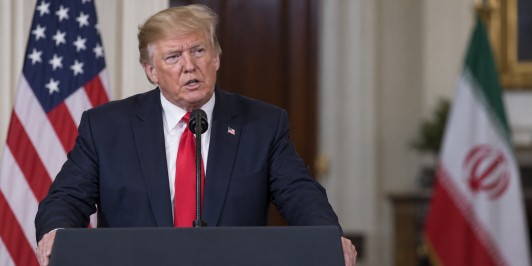
The geopolitical landscape remains tense as the United States continues to confront Iran over its nuclear ambitions and regional activities. Addressing the United Nations General Assembly in New York, President Donald Trump highlighted the ongoing conflict with Iran and the potential for future negotiations. He indicated that discussions could resume following the upcoming U.S. midterm elections in November, presenting a choice between reaching a diplomatic agreement or escalating military actions.
In his 37-minute speech, Trump defended the U.S.’s military responses to Iranian actions and underscored a firm stance against allowing Tehran to develop nuclear weapons. Despite previous opportunities for dialogue, Trump accused Iran of spurning negotiations, which he argued has led to heightened military tensions. He also urged other nations to support economic sanctions against Iran, emphasizing the need for a unified approach to pressure Tehran.
Trump’s address comes amid ongoing disturbances in the Strait of Hormuz, a critical passage for global oil shipments, which Iran has been accused of disrupting. These disruptions have exacerbated regional security concerns and contributed to global energy supply uncertainties, underlining the broader impact of the U.S.-Iran conflict.
Moreover, Trump used his UN platform to criticize the International Criminal Court (ICC), urging member countries to withdraw from the institution. He stated that the United States would not recognize any international legal proceedings involving its military personnel, reinforcing his administration’s stance on sovereignty and international law.
In addition to focusing on the Middle East, Trump mentioned the Gaza ceasefire and efforts towards reconstruction, aligning with broader UN discussions on ongoing conflicts and global crises. His remarks reflect a complex international stage where diplomatic and military strategies continue to shape U.S. foreign policy.