
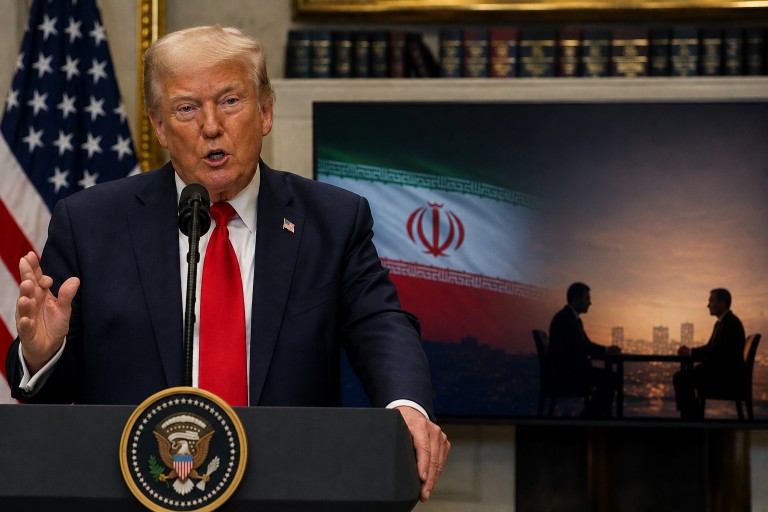
Amidst rising tensions, President Donald Trump announced that the United States had decided to cancel a planned military strike on Iran. The reversal came after assurances were received that negotiations were nearing a framework agreement aimed at reopening the Strait of Hormuz and addressing concerns surrounding Iran’s nuclear ambitions. Trump noted that the decision was influenced by requests from Iran and other nations in the Middle East, with Israel reportedly backing this diplomatic approach.
Contrary to Trump’s statements, Iranian officials quickly dismissed the notion that they had asked for the military action to be stopped. Calling the U.S. President’s claim inaccurate, Iran maintained that its military forces remain vigilant. Authorities in Tehran issued a stark warning, emphasizing that any military engagement by the United States or Israel would be met with a robust retaliation, potentially targeting energy infrastructure across the region.
The situation has kept international energy markets on high alert, with the strategic Strait of Hormuz—a vital chokepoint for global oil shipments—at the center of these geopolitical tensions. Concerns over potential disruptions in the shipping routes have persisted, adding to the uncertainty about oil supplies and the overall stability of regional security.
While the immediate threat of military conflict appears to have been averted, the underlying issues remain unresolved, leaving open the question of how the situation might develop. The delicate balance of diplomacy and military readiness underscores the complex dynamics at play, with the potential for rapid escalation still looming large over the Gulf region.