
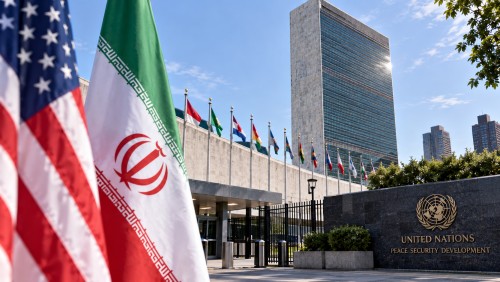
In the midst of ongoing tensions between the United States and Iran, the U.S. government has decided to permit senior Iranian officials to attend the upcoming United Nations General Assembly in New York. This decision aligns with the United States’ obligations as the host nation of the UN, allowing foreign diplomats access to its headquarters, despite the complex diplomatic backdrop.
The U.S. State Department has confirmed that a core delegation from Iran, including President Masoud Pezeshkian and Foreign Minister Abbas Araqchi, will be issued visas for the event. While the United States is upholding its duty under the 1947 UN headquarters agreement, the Iranian delegation will still face stringent U.S. travel restrictions. These include limitations on their movement, confining them to designated areas such as the UN headquarters, Iran’s UN mission, and the residence of its ambassador.
The broader context of this decision is the intermittent diplomatic engagement between Washington and Tehran, aiming to resolve the conflict that erupted on February 28. This conflict was prompted by U.S. and Israeli military actions in Iran, which then led to retaliatory attacks by Tehran against Israel and Gulf states that host U.S. military bases.
While the United States is fulfilling its international obligations to Iran, it has taken a different stance regarding Palestinian officials. The U.S. has opted to deny entry to Palestinian representatives for the UN General Assembly, including Palestinian President Mahmoud Abbas. This move highlights the complex dynamics and considerations that influence U.S. visa decisions for international diplomatic events.
Despite the international tensions, the U.S. continues to navigate its responsibilities and strategic interests, balancing security and diplomatic considerations with its commitment to hosting the United Nations in New York. The decision to allow Iranian officials to attend the assembly underscores the nuanced approach required in international diplomacy, even amid ongoing conflicts.