
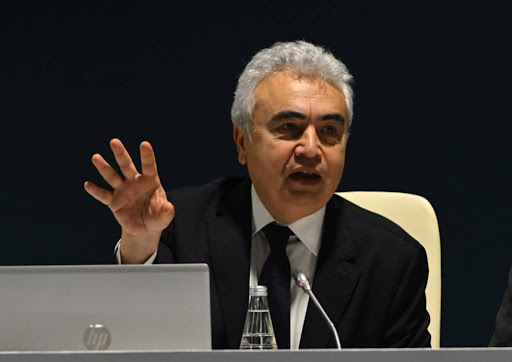
The executive director of the International Energy Agency has sounded one of the most serious alarms in the agency’s history, warning that the energy shock caused by the Iran war represents an unprecedented convergence of crises. Fatih Birol described the current situation as equivalent to two oil crises and one major gas crisis happening simultaneously. He made these remarks during a visit to Australia, where he met with senior government officials.
Birol explained that the 1973 and 1979 oil crises each removed roughly 2.5 million barrels per day from the market, combining for around 5 million barrels of daily loss at their peaks. Russia’s war in Ukraine removed approximately 75 billion cubic metres of gas from global supply chains. By contrast, the Iran war has already cut 11 million barrels of oil per day and 140 billion cubic metres of gas, making it far more damaging in scale.
The IEA took historic action by releasing 400 million barrels from strategic petroleum reserves, the largest emergency release the organization has ever undertaken. At the same time, Birol pushed member countries to adopt energy-saving policies, including greater use of remote work, reduced highway speeds, and fewer flights. These measures were aimed at curbing demand while supply-side solutions remained elusive.
The Strait of Hormuz, which serves as a critical chokepoint for global oil shipments, has been disrupted by strikes on shipping vessels, triggering shortages in markets that depend heavily on Gulf oil. The Asia-Pacific region has been among the hardest hit, with Japan indicating it could consider deploying military assets for minesweeping if a ceasefire is agreed. Birol confirmed that Gulf energy infrastructure damage was so extensive that recovery would take considerable time.
The IEA chief concluded that a lasting resolution depends entirely on reopening the Hormuz strait to international shipping. He warned that even further reserve releases, while helpful, could only cushion the economic blow rather than solve the underlying problem. Global coordination among governments, he said, is now more urgent than ever.
