
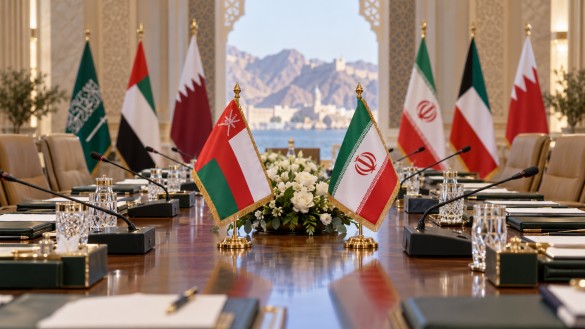
Oman’s Foreign Minister Badr Albusaidi has advocated for a new regional security framework that includes the Gulf states, Iran, and Iraq, emphasizing the importance of Middle Eastern countries taking more responsibility for their own security. Speaking at Girton College, Cambridge, Albusaidi pointed out that excluding Iran from past regional security arrangements has heightened tensions and complicated dispute resolutions.
Albusaidi proposed a non-aggression pact involving Gulf countries, Iran, and Iraq, highlighting the need for dialogue and shared responsibility. He criticized the excessive influence of external powers, particularly the United States, in shaping regional security policies, which he believes has impeded the ability of neighboring countries to find common ground.
This call for greater regional cooperation comes amid high-level discussions in Tehran between officials from Türkiye, Pakistan, and Saudi Arabia on regional security and the prevention of renewed conflict involving the United States and Iran. Their talks also addressed potential future security structures in the Middle East.
The Omani foreign minister underscored the significance of resolving disputes related to the Strait of Hormuz, a crucial waterway for global energy shipments. He argued for regional collaboration to ensure maritime security and prevent further escalation in a region already fraught with tensions.
Albusaidi noted that previous negotiations between Washington and Tehran, in which Oman played a mediating role, had shown promise, suggesting that a broader agreement was within reach. However, the path to a regional security pact is fraught with challenges, including longstanding mistrust and concerns over Iran’s military activities.
The proposal reflects Oman’s ongoing diplomatic efforts to foster peace and cooperation in the Middle East, as countries in the region seek to reduce tensions and establish a more self-reliant security framework. Nonetheless, achieving such an agreement would require extensive negotiations and assurances from all parties involved.