
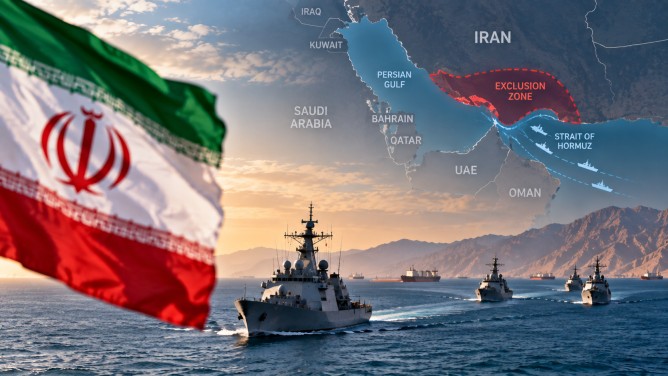
Iran has unveiled plans to create a new “exclusion zone” near the Strait of Hormuz, aiming to regulate vessels it suspects of attempting to navigate through this vital maritime passage. This move comes from Mohsen Rezaei, the recently appointed head of Iran’s Supreme National Security Council. He specified that the zone would stretch from the vicinity of the U.S. naval blockade towards the Strait of Hormuz and extend into the Arabian Gulf. Vessels deemed to have entered this zone with the intention of crossing the strait could find themselves subjected to Iranian sanctions.
This development follows a significant escalation in hostilities, marked by a U.S. military strike against three Iranian oil tankers in response to Iran’s launch of ballistic missiles targeting U.S. warships. Iran further claimed it had successfully struck an unmanned U.S. vessel trying to enter the strait, a claim that has been denied by the U.S. military. The Strait of Hormuz remains a crucial conduit for global oil and gas supplies, and any disturbances in this region have sparked concerns over potential impacts on energy prices and the broader world economy.
The U.S. has bolstered its naval presence to enforce a blockade on Iranian ports, aiming to prevent Tehran from exporting oil. This move is part of Washington’s broader strategy to ramp up economic pressure on Iran, particularly after the breakdown of diplomatic negotiations. Despite the rise in tensions, U.S. officials maintain that a significant volume of oil continues to transit through the Strait of Hormuz, thanks to naval escorts and alternative pipelines in the region.
Rezaei has indicated that while Iran remains open to diplomatic engagement, it is seeking stronger assurances in any future agreements. The dialogue between Washington and Tehran has reached an impasse, with both sides continuing to levy accusations of treaty violations against each other. As these geopolitical tensions unfold, the Strait of Hormuz stands at the center of a complex interplay of international relations, energy security, and military posturing.